2026-10-24 ·
Preventing Washer Issues During Gresham’s Wet Winters
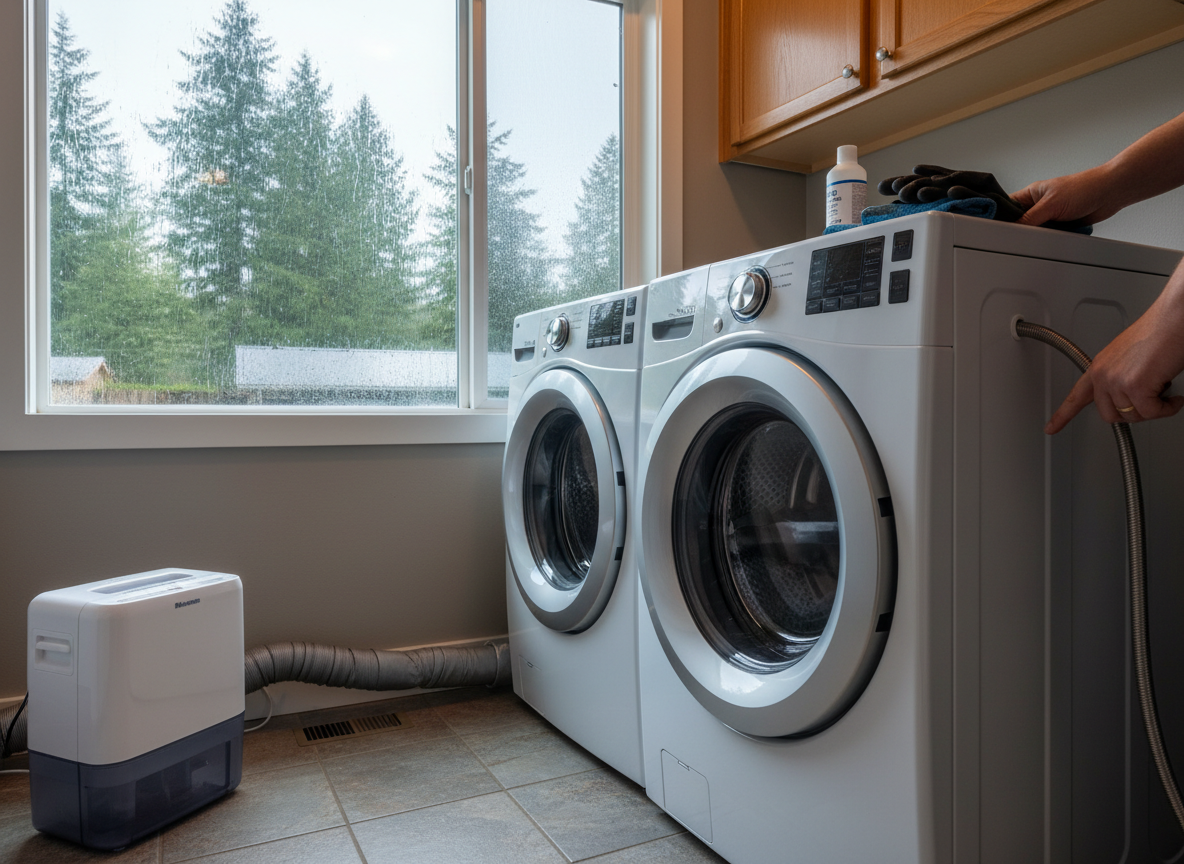
Gresham’s wet winters bring repeated rain and periodic flooding that push water into basements and utility rooms across Multnomah County, especially in Rockwood and areas near the Gresham Pioneer Cemetery. Elevating the washer 4–6 inches on a stable platform and installing a drain pan with a pump cuts the chance of water reaching electrical components and causing shorts or corrosion. Checking the standpipe and floor drain for debris before the rainy season starts prevents backflow that can flood the machine cabinet during a storm.
Moisture and Drainage Challenges in Local Housing Stock
Many homes in Rockwood and Downtown Gresham date to the 1960s–1980s and sit on flat lots with older galvanized or cast-iron drain lines that slow during heavy rain. When water backs up, it often enters through the washer’s drain hose or leaks past the door gasket. Residents near Mt. Hood Community College see the same pattern because the soil stays saturated for weeks. Running a monthly cleaning cycle with 2 cups of white vinegar removes soap residue that traps moisture and promotes mold inside the drum and pump. Leaving the door ajar after each load allows the interior to dry fully, cutting odor and rust on the stainless-steel tub.
Seasonal Maintenance Steps Before Winter Sets In
Inspect the inlet hoses for bulges or cracks and replace any older than 5 years with braided stainless-steel lines rated for 150 psi. Clear the pump filter on front-load models by removing the small access panel at the bottom front and rinsing out lint and sediment that accumulate faster in humid conditions. Verify the machine sits level within 1/8 inch using a 2-foot level; an out-of-level washer vibrates more when the floor is damp and can shift enough to stress the drain connection. Homeowners in Pleasant Valley and East Gresham also benefit from checking that exterior dryer vents remain clear, since shared laundry rooms often route moist air near washer locations.
When to Call for Professional Assessment
If the washer shows error codes after a heavy rain or the floor around the unit stays damp for more than a day, schedule washer repair before the next storm. Technicians familiar with Multnomah County conditions can test the drain pump and check for hidden corrosion in the control board that develops after repeated moisture exposure. For households running multiple loads weekly, pairing this check with laundry appliance repair keeps both washer and dryer functioning through the wet months. Older neighborhoods around the Gresham Pioneer Cemetery often need these inspections twice a year because the high water table keeps basements damper than homes farther east toward Boring.
Long-Term Protections for Repeated Wet Seasons
Install a whole-house surge protector and a dedicated 20-amp circuit for the washer to guard against voltage drops common during winter storms. In Rockwood homes with finished basements, routing a condensate line from a dehumidifier into the washer standpipe helps control ambient humidity that otherwise condenses on cold metal surfaces inside the machine. Tracking the age of the washer matters; most units in Gresham last 8–12 years before seals and bearings degrade, and wet winters shorten that span when water reaches the motor. Keeping a simple log of any leaks or unusual noises after storms helps technicians diagnose issues faster when service is needed at the address on SE Stark Street.